Blog
How to Choose the Right Oxygen Cylinder Size for a Patient

N.B.: Follow your doctor’s recommendation strictly.
Medical oxygen cylinders are available in a wide range of sizes, from small portable units to large ones, to meet your patient’s specific needs. So, you need to pick the most suitable size for the patient. But how to choose the right oxygen cylinder size for a patient?
Let’s understand cylinder sizes and capacities, assess your patient’s oxygen requirement, and consider some key factors. Choose the right-sized oxygen cylinder to ensure safe, reliable oxygen therapy.
Why Medical Oxygen Cylinders Comes in Different Sizes?
Different patients have different needs, which is why oxygen cylinders are available in different sizes. For instance:
- Medium to large standard-sized medical oxygen cylinders are usually kept at homes and hospitals for patients who need continuous therapy at a high flow rate.
- Smaller and lighter portable oxygen cylinders are perfect for patients who want mobility to move around the house or even travel outdoors.
How to Choose the Right Oxygen Cylinder Size – 6 Things to Consider
Consider multiple key factors, such as medical needs, usage duration, and portability. Know how much oxygen your patient requires (flow rate in liters per minute), how long the patient needs it daily, and whether the cylinder is for home use, hospital backup, or travel. Here’s a detailed breakdown:
1. Understand Oxygen Cylinder Sizes
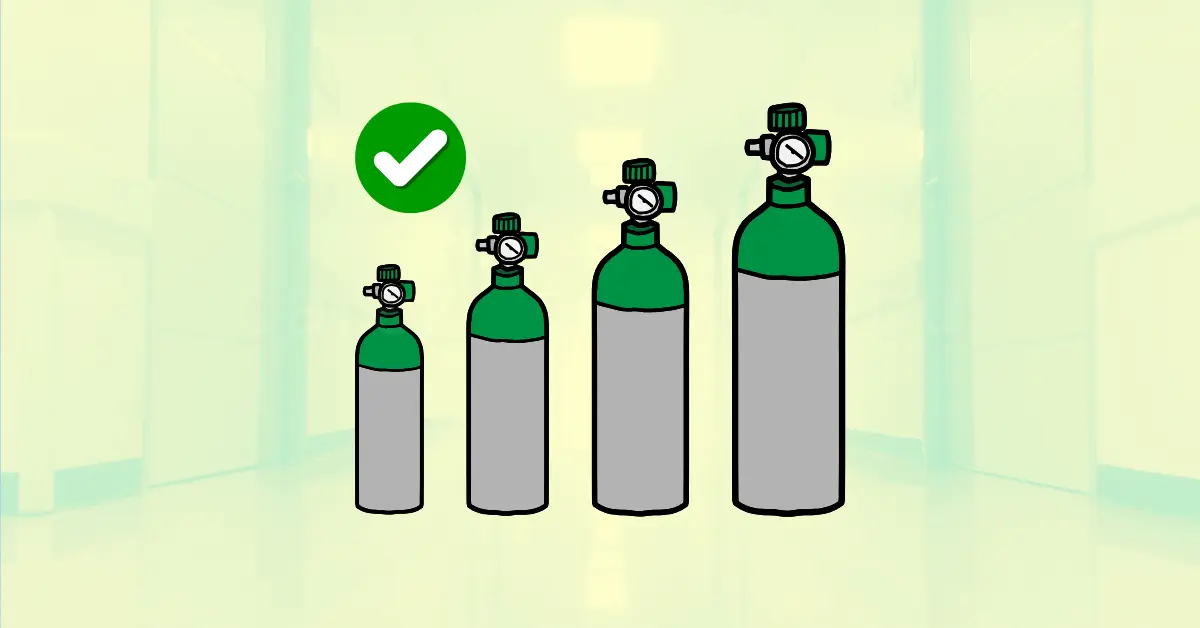
Medical oxygen cylinders come in different sizes, typically measured in liters of compressed gas:
- Small Portable Cylinders (1–3 liters, B or C size): Lightweight, ideal for travel or short trips.
- Medium Cylinders (6–10 liters, D or E size): Suitable for patients needing oxygen for part of the day, often kept at home with some portability.
- Large Cylinders (40–50 liters, F, G, or J size): Heavy, usually kept stationary at home or hospital. Best for patients needing continuous oxygen support.
Source: A comprehensive oxygen cylinder size chart.
2. Assess the Patient’s Requirement
- Doctor’s Prescription: Always use the prescribed oxygen flow rate (e.g., 1–5 LPM for mild oxygen needs, 3–4 LPM for chronic lung conditions, and 5–6 LPM for higher needs or during physical activity, above 6 LPM for specialized or critical care). Determine the size of an oxygen cylinder based on the prescribed oxygen flow rate. Match what your doctor has advised.
- Daily Usage Hours: Calculate how many hours per day the patient will need oxygen therapy.
3. Calculate Oxygen Duration
To estimate how long a cylinder will last, divide the cylinder capacity by the oxygen flow rate, such as Duration (hours) = Cylinder capacity (liters) ÷ Oxygen flow rate (LPM).
Example:
- A 10L cylinder at 1 LPM will last = 10 ÷ 1 = 10 hours
- A 10L cylinder at 10 LPM will last = 10 ÷ 10 = 20 hour
Now determine how many cylinders the patient will need daily or weekly.
4. Consider Portability Needs
Choose a portable oxygen cylinder for outdoor use, travel, or frequent movement, and carry it easily.
- Bedridden patients: A large cylinder at home (with a small portable cylinder for essential movement).
- Active patients: A small portable oxygen cylinder for frequent movement.
- Emergency backup: Even if you use an oxygen concentrator, keep a small cylinder as a backup.
- Travel or outdoor use: Choose a portable oxygen cylinder for outdoor use or travel, and carry it easily.
5. Think About Safety and Convenience
- Verify Authenticity: Check the drug license number of the oxygen cylinder company, as oxygen used for industrial purposes does not require it.
- Refill: Ensure availability of timely oxygen refill services near you for your selected cylinder size.
- 24/7 Support: Check if the supplier provides 24/7 support, especially for critical patients.
- Convenience: Choose small cylinders to carry and move them easily. Choose large cylinders for continuous and long-term oxygen therapy.
Note: Small cylinders run out faster, and large cylinders are harder to move.
6. Count on Budget and Long-Term Cost
- Choose a large cylinder to avoid frequent refills. Frequent refills may raise long-term costs.
- Choose a small cylinder for temporary use during an emergency or if you can’t afford to buy a large cylinder currently. This way you can avoid extra cost. Buy or rent a larger one with a calm head if you need more oxygen later.
Note: Some providers offer flexible oxygen cylinder rental plans that may be more affordable for you.
Also read: How to Find a Reliable Oxygen Cylinder Shop
Sum Up
That’s all about how to choose the right oxygen cylinder size for your patient’s needs.
In summary, for short-term or travel use, choose a small portable oxygen cylinder (1–3 liters). For moderate daily use, choose a medium oxygen cylinder (6–10 liters). For continuous or long-term use, choose a large oxygen cylinder (40–50 liters), combined with a portable oxygen cylinder as a backup.
Above all, always follow the doctor’s prescription to match the cylinder size with the patient’s needs.